
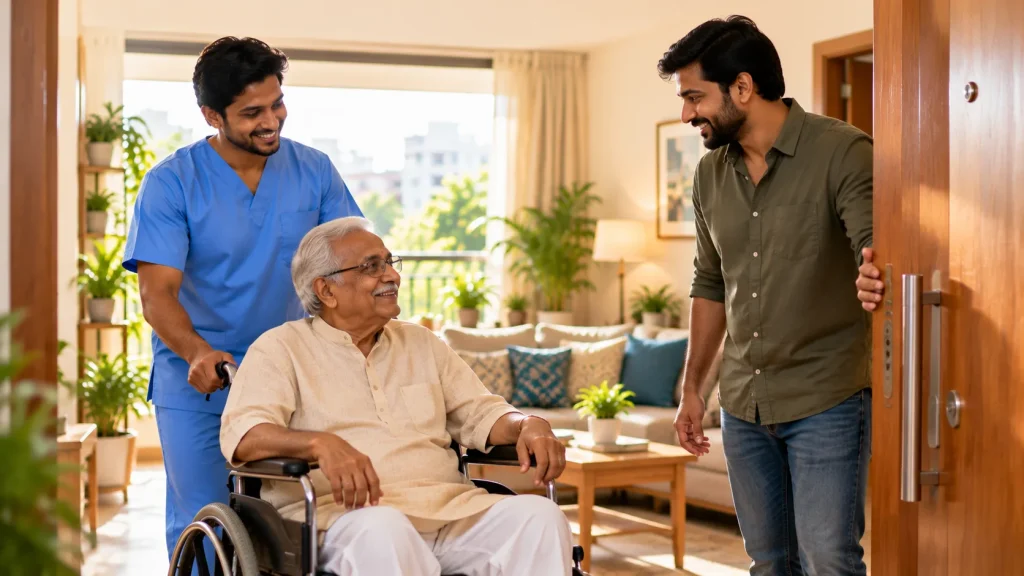
Coming home after a hospital stay is a relief for every family. But the first few weeks at home are an important part of recovery. Medicines change, movement may be limited and small signs need to be watched closely. This simple checklist will help you plan safe post hospital care at home for your loved one in Bangalore.
Please note: this checklist is general information. Always follow the advice of the treating doctor and the hospital discharge plan.
Before Discharge: Prepare These Things
- Collect the discharge summary and the list of medicines with timings
- Ask the doctor about diet, rest, wound care and allowed movement
- Note the date of the next follow up visit
- Keep the doctor’s and hospital’s contact numbers handy
- Arrange support at home from the very first day, if needed
Set Up a Safe Recovery Space at Home
- Choose a room close to the bathroom, if possible
- Remove loose rugs and clear walking paths to prevent falls
- Keep water, medicines, a phone and a light within easy reach
- Use a comfortable bed with enough pillows for support
- Keep the room clean, airy and well lit
Medicines and Doctor’s Instructions
Missed or mixed up medicines are a common problem after discharge. Keep a written chart with each medicine, the dose and the time. A weekly pill organiser makes this easier. Do not stop or change any medicine without asking the doctor.
Diet, Fluids and Rest
Follow the diet advised at discharge. Offer small, regular meals and enough fluids unless the doctor has said otherwise. Good rest is just as important, so plan a calm routine with regular sleep times.
Gentle Movement and Preventing Falls
Many patients are advised to start moving slowly. Always follow the doctor’s guidance on how much activity is safe. Someone should stay close during the first walks, and support such as a walker should be used if it was recommended.
Watch for These Warning Signs
Contact the treating doctor straight away, or go to the nearest hospital in an emergency, if you notice:
- Fever or chills
- Increasing pain, swelling, redness or discharge from a wound
- Breathlessness or chest pain
- New confusion, unusual drowsiness or weakness
- Unable to eat, drink or pass urine normally
What the First 30 Days Usually Look Like
Week 1: Settle in safely
Focus on rest, medicines on time and close observation. This is when support at home matters most.
Week 2: Build a routine
As recovery continues, a steady routine for meals, medicines and gentle movement helps your loved one regain confidence.
Weeks 3 and 4: Gradual independence
Many patients start doing more on their own. Keep up with follow up visits and share any concerns with the doctor.
If you are unsure how much support your loved one will need, you can talk to our care team before discharge.
How a Home Caregiver Helps After Discharge
Our post hospital care at home service supports recovery after surgery, a fracture, a stroke or a long illness. Caregivers help with medicines as prescribed, wound care as advised by the doctor, meals, gentle movement and close observation, and keep the family updated every step of the way.
Frequently Asked Questions
When should we arrange post hospital care?
Ideally before discharge, so a caregiver can support your loved one from the first day at home.
Can qualified nurses be arranged for medical needs?
Yes. For patients who need medical support at home, qualified nurses can be arranged as part of the care plan.
How long will we need support?
It depends on the patient’s condition and the doctor’s advice. Care can be arranged for as long as your loved one needs it.
Need Home Care for a Loved One in Bangalore?
Talk to our care team today. We will understand your needs and suggest a care plan that fits your family.